
|
Biodiesel SuppliesSearch this site! Here is a general list of biodiesel supplies you may need. It is important to keep in mind that high quality finished biodiesel can largely be dependent on the use of high quality biodiesel supplies. 'High quailty' should not to be confused with expensive supplies. High quality Biodiesel can be made inexpensively, but it is important to put some thought into the equipment you use.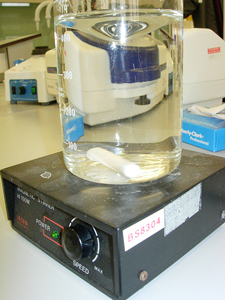 Biodiesel Making Equipment: Biodiesel Making Equipment:• Biodiesel kits are a great way to be introduced to biodiesel. The most basic of kits will have you use straight vegetable oil and will have the catalyst and methanol already measured out for you – simply heat and mix. Other kits give you enough materials to make several test batches, and the option of using WVO. • If you plan on collecting waste vegetable oil for your stock, you will need 55-gallon drums, a pump, and also sampling containers. • Filters are used for filtering WVO and even SVO before use. They can also be used for filtering the biodiesel after production. Photo courtesy of Iofaesofa Some home brewers use blue jeans as a filter. Filters can be purchased as bag or cartridge. Some brewers don’t filter at all – they just let it settle and pump off the top. • Titration tests are used to calculate the amount of catalyst that will be needed to perform transesterification (needs will vary based on feedstock). • Chemicals - for titration, catalysts, and dry wash resins (dry washing is optional). • A scale to weigh the chemicals • A mixer (not necessary) for dissolving the catalyst in the methanol, performing titration tests. • A heater for heating the oil to the correct temperature for transesterification to take place, and some use a heater to dry the biodiesel. • A reactor for transesterification to take place in. • Settling tank where the mixture will set until the glycerin has settled to the bottom. • Wet Wash or Dry Wash tank where the biodiesel is purified usually by water or ion exchange resins. • A methanol recovery system for reclaiming remnant methanol for re-use (if desired). • A biodiesel processor (kind of self explanatory) is a requirement for your biodiesel supplies! There are many options; they come in kits or fully assembled... or you can even build your own. Some are automatic; some must be periodically tended to. • A pump for transferring oil to different containers during production. • A storage tank for biodiesel may be made of aluminum, steel, teflon or fluorinated polyethylene. Many home brewers store theirs in a 55-gallon drum. Biodiesel should be stored in a clean, dry, dark environment. A storage tank for feedstock oil is also needed. • SA storage Container for the chemicals - it must be air tight. • Flow Meters to measure the quantity of methanol and oil added to a batch. • A centrifuge can be used for pre-treatment; to separate the water, oil, and solids; and is most commonly used as a speedy way to separate the glycerin from the biodiesel. • A Rapid Biodiesel Tester or a Gas chromatograph (used by the more advanced producers) to check the quality of the feedstock and level of free glycerin in the biodiesel. • Particulate Test used for testing the particulate level, thus the quality of the finished biodiesel. •
Safety biodiesel supplies
Return from 'Biodiesel Supplies' to 'Biodiesel Homepage'
|