Thinking about Producing
Palm Oil Biodiesel?
Search this site!
Decide for yourself! Do the pros outweigh the cons to warrant use palm oil biodiesel? Here is a short list of benefits and disadvantages.
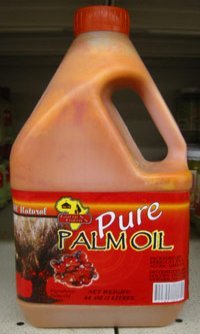
Here are some of the Benefits of Palm Oil Biodiesel:
• It has high oil content - the mesocarp of the seed contains 49% oil, and the kernel contains 50%.
• It yields an average of 635 gallons of oil per acre! This is the highest oil-producing crop!
• Palm oil has a high ignition quality (a measure of how easily it will ignite in the engine).
• Malaysia had one of its palm plantations certified by Roundtable on Sustainable Palm Oil (RSPO).
• Malaysia has started re-planting on existing palm plantations, and is recycling its old palm trunks to be used for mulch.
Photograph courtesy of Whitebox
Now for Some of the Downsides…
• Palm oil has a high pour point - 59 degrees F (15 C)… Although, it was announced that the Malaysian Palm Oil Board (MPOB) has produced a palm oil with a pour point between -21 (-6F) and 0 C (32F).
• Destruction of peat bogs for palm plantations releases great amounts of carbon into the atmosphere.
• Greenpeace and Friends of the Earth estimate that the destruction of peat-land and rainforests for the development of palm plantations releases more CO2 into the atmosphere than burning biofuels can save.
• It is feared that certain species will become extinct due to habitat destruction..
Updates:
Here is a link that provides updates on
palm oil news
hourly, and also has graphs of the history of oil prices. (Opens in a new window).
Return from 'Palm Oil Biodiesel' to 'Biodiesel Crops'
Biodiesel Homepage
