Wondering if Jatropha Biodiesel
is the Way to Go?
Search this site!
The idea of using jatropha biodiesel has been met with lots of excitement. Jatropha curcas has been cited by Goldman Sachs as one of the best candidates for biodiesel feedstock. Below you will find a list the many benefits of this crop.
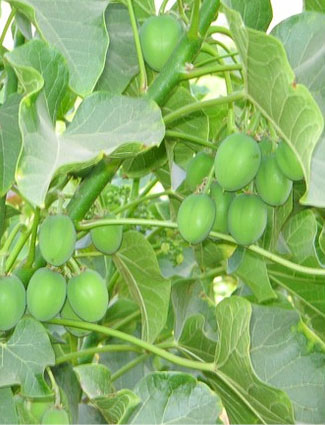
Facts About Jatropha curcas:
• Jatropha is a perennial plant.
• It produces it's first seeds within two years of being planted.
• The seeds take 2-4 months to mature.
• It produces seeds for an average of 50 years!
• With sufficient water, and high enough temperatures, it can produce several crops throughout the year.
• The crop can thrive in poor soils, and the seeds are poisonous and do not compete with the food market.
Photo Courtesy of Edward Yanquen
• On average it produces 202 gallons of oil per acre. That is more than four times the oil yeild of soybean plants!!
• As of 2011, SG Biofuels Inc. has developed hybrid Jatropha seeds called JMax seeds. These JMax hybrids will produce on on average, twice the crop as other commercial varieties.
Growing Conditions for Jatropha:
• It is able to grow well in moderate and poor soils.
• It is drought tolerant surviving 7-8 months by dropping its leaves.
• This plant grows best in soils that drain easily.
• It grows best in soil with a PH between 6 and 9.
• Jatropha needs to be planted between the altitudes of 0 and 1,640 feet (0-500 meters).
• It requires at least 23 inches (600 mm) of rainfall.
• It prefers temperatures between 68 degrees Fahrenheit and 85 F (20-28 C).
Jatropha will likely be one of the leading sources of biofuel oil because it can be grown in areas that other crops would not survive.
For a bit more information you can read this documentation of the chemical analysis of the seeds.
Return from 'Jatropha Biodiesel' to 'Biodiesel Crops'
Biodiesel Homepage
